The adoption of agriculture triggered a rapid shift towards starch-rich diets in human populations. Amylase genes facilitate starch digestion, and increased amylase copy number has been observed in some modern human populations with high-starch intake, although evidence of recent selection is lacking. Here, using 94 long-read haplotype-resolved assemblies and short-read data from approximately 5,600 contemporary and ancient humans, we resolve the diversity and evolutionary history of structural variation at the amylase locus. We find that amylase genes have higher copy numbers in agricultural populations than in fishing, hunting and pastoral populations. We identify 28 distinct amylase structural architectures and demonstrate that nearly identical structures have arisen recurrently on different haplotype backgrounds throughout recent human history. Leveraging 533 ancient human genomes, we find that duplication-containing haplotypes have rapidly increased in frequency over the past 12,000 years in West Eurasians, suggestive of positive selection.
Humans have evolved to digest starch more easily since the advent of farming
Structural variants (SVs) account for the majority of base pair differences both within and between primate species. However, our understanding of inter- and intra-species SV has been historically hampered by the quality of draft primate genomes and the absence of genome resources for key taxa. Recently, advances in long-read sequencing and genome assembly have begun to radically reshape our understanding of SVs. In this review, we examine the ways in which telomere-to-telomere genome assemblies and pangenomes are transforming our understanding of and approach to primate SV.
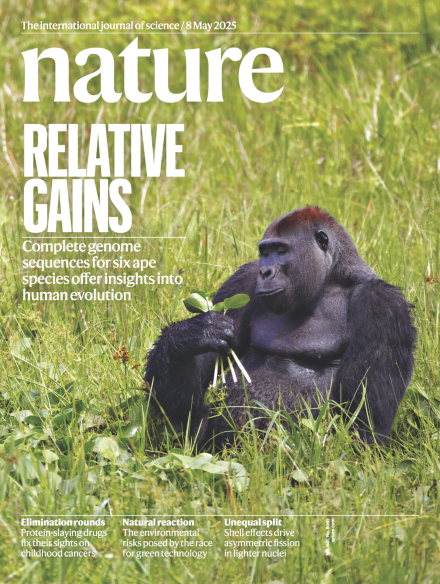
The complete sequence and comparative analysis of ape sex chromosomes
Kateryna D. Makova, Brandon D. Pickett, Robert S. Harris , …, Joana L. Rocha, and 80 more authors
Reference assemblies of great ape sex chromosomes show that Y chromosomes are more variable in size and sequence than X chromosomes and provide a resource for studies on human evolution and conservation genetics of non-human apes.
2023
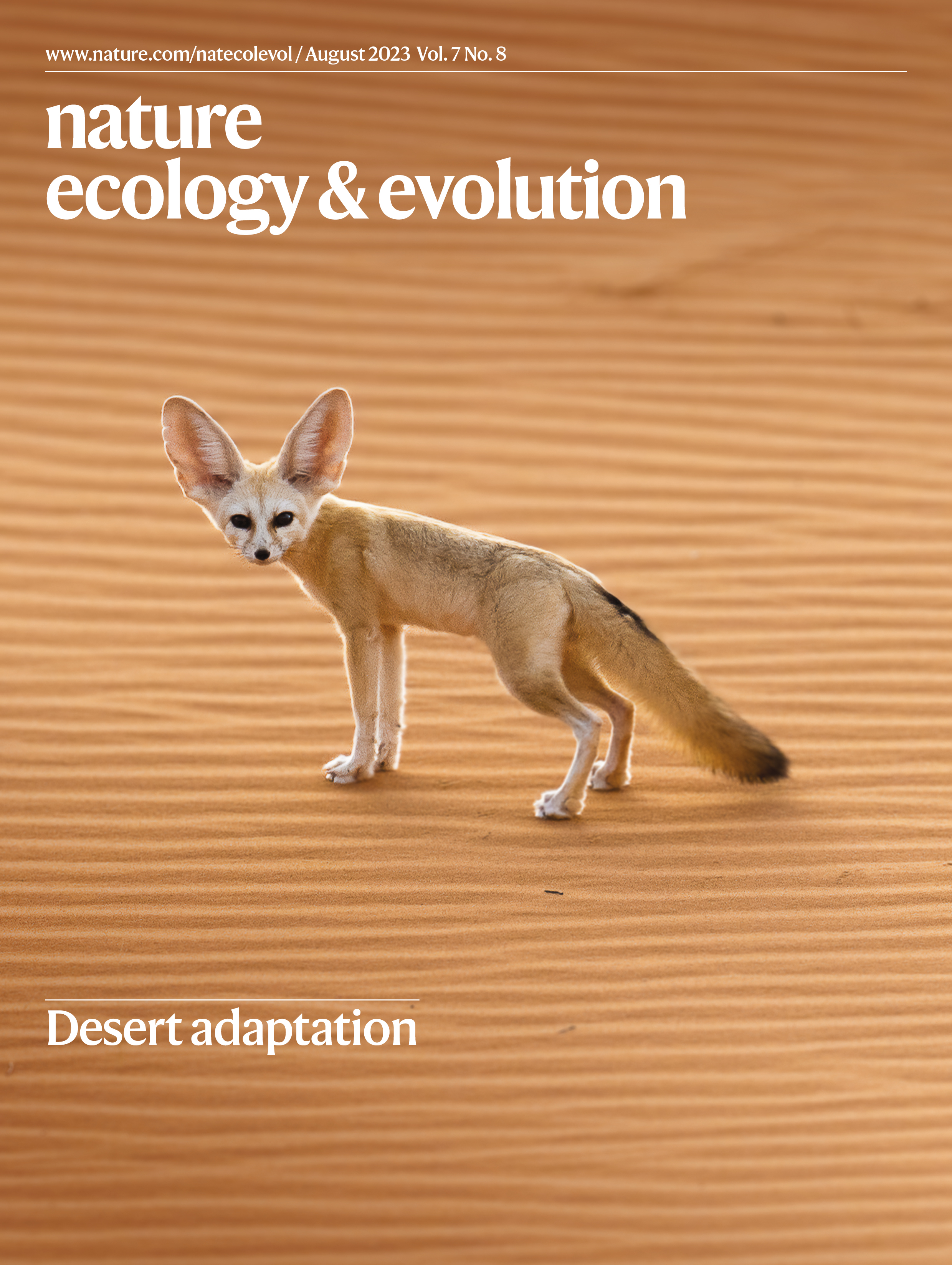
North African fox genomes show signatures of repeated introgression and adaptation to life in deserts
Joana L. Rocha, Pedro Silva, Nuno Santos , and 8 more authors
Elucidating the evolutionary process of animal adaptation to deserts is key to understanding adaptive responses to climate change. Here we generated 82 individual whole genomes of four fox species (genus Vulpes) inhabiting the Sahara Desert at different evolutionary times. We show that adaptation of new colonizing species to a hot arid environment has probably been facilitated by introgression and trans-species polymorphisms shared with older desert resident species, including a putatively adaptive 25 Mb genomic region. Scans for signatures of selection implicated genes affecting temperature perception, non-renal water loss and heat production in the recent adaptation of North African red foxes (Vulpes vulpes). In the extreme desert specialists, Rüppell’s fox (V. rueppellii) and fennec (V. zerda), we identified repeated signatures of selection in genes affecting renal water homeostasis supported by gene expression and physiological differences.
Genetic basis of aposematic coloration in a mimetic radiation of poison frogs
Tyler Linderoth, Diana Aguilar-Gómez, Emily White , …, Joana L. Rocha, and 9 more authors
The evolution of mimicry in a single species or population has rippling inter and intraspecific effects across ecological communities, providing a fascinating mechanism of phenotypic diversification. In this study we present the first identification of genes underlying Müllerian mimicry in a vertebrate, the Peruvian mimic poison frog, Ranitomeya imitator. We sequenced 124 R. imitator exomes and discovered loci with both strong divergence between different mimetic morphs and phenotypic associations within an intraspecific admixture zone, implicating mc1r, asip, bsn, retsat, and krt8.2 in the evolution of mimetic color phenotypes.
2022
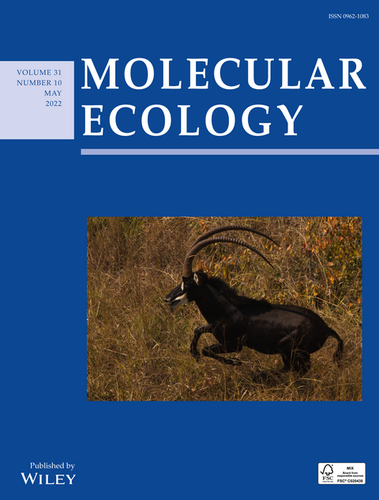
African climate and geomorphology drive evolution and ghost introgression in sable antelope
Joana L. Rocha, Pedro Vaz Pinto, Hans R. Siegismund , and 5 more authors
The evolutionary history of African ungulates has been explained largely in the light of Pleistocene climatic oscillations. In contrast, comparatively fewer studies have addressed the continent’s environmental heterogeneity and the role played by its geomorphological barriers. In this study, we performed a range-wide analysis of complete mitogenomes of sable antelope (Hippotragus niger) to explore how these different factors may have contributed as drivers of evolution in southcentral Africa. Our results supported two sympatric and deeply divergent mitochondrial lineages in west Tanzanian sables, which can be explained as the result of introgressive hybridization of a mitochondrial ghost lineage from an archaic, as-yet-undefined, congener.
2021
Life in Deserts: The Genetic Basis of Mammalian Desert Adaptation
Joana L. Rocha, Raquel Godinho, José C. Brito , and 1 more author
Deserts are among the harshest environments on Earth. The multiple ages of different deserts and their global distribution provide a unique opportunity to study repeated adaptation at different timescales. Here, we summarize recent genomic research on the genetic mechanisms underlying desert adaptations in mammals. Several studies on different desert mammals show large overlap in functional classes of genes and pathways, consistent with the complexity and variety of phenotypes associated with desert adaptation to water and food scarcity and extreme temperatures.
Convergent evolution of increased urine-concentrating ability in desert mammals
Joana L. Rocha, José C. Brito, Rasmus Nielsen , and 1 more author
One of the most celebrated textbook examples of physiological adaptations to desert environments is the unique ability that desert mammals have to produce hyperosmotic urine. We review urine-concentrating ability data from the literature in 121 mammalian species with geographic ranges encompassing varying climatic conditions, and explicitly test the hypothesis that desert-dwelling mammals have evolved greater ability to concentrate urine than non-desert species. Ancestral state reconstruction and phylogenetic generalised least-squares models show that aridity is likely to have been one of the main selective pressures driving the repeated evolution of increased maximum urine-concentrating ability in different desert mammalian lineages.